
What the 56-group classification means
China’s official national classification comprises 56 ethnic groups: the Han majority and 55 ethnic minorities. The page’s retained headline uses the number 56, but that number should not be read as 56 minority groups. The National Bureau of Statistics reports 125,467,390 people belonging to ethnic minorities in the 2020 census, or 8.89 percent of the national population on that census basis. These figures describe a dated statistical classification; they do not count people attending festivals, speaking a particular language or living in tourist villages.
For travel, a community name is the beginning of an enquiry. Ask which province, county, village and language the visit concerns. The same officially classified group may contain different local identities, speech varieties and clothing traditions. A museum object can document one place and period without representing every family today. Modern homes, ordinary clothes and urban employment are part of contemporary culture, so a visitor should not judge authenticity by whether residents match a souvenir photograph.
Use the official directory for terminology and dated demographic context. Use the current local organizer for access, event dates and visitor rules. A broad government profile, an archaeological inscription and a household’s permission answer different questions; one cannot substitute for the others.
A regional directory for planning
The following starting points cover the communities in this guide series. They are examples for route design, not a complete distribution map. Population totals are the 2020 national figures in the cited official profiles. The Gaoshan label needs a separate discussion of Taiwan Indigenous peoples and geographic coverage.
| Community | 2020 count | Areas to consider | Useful first focus |
|---|---|---|---|
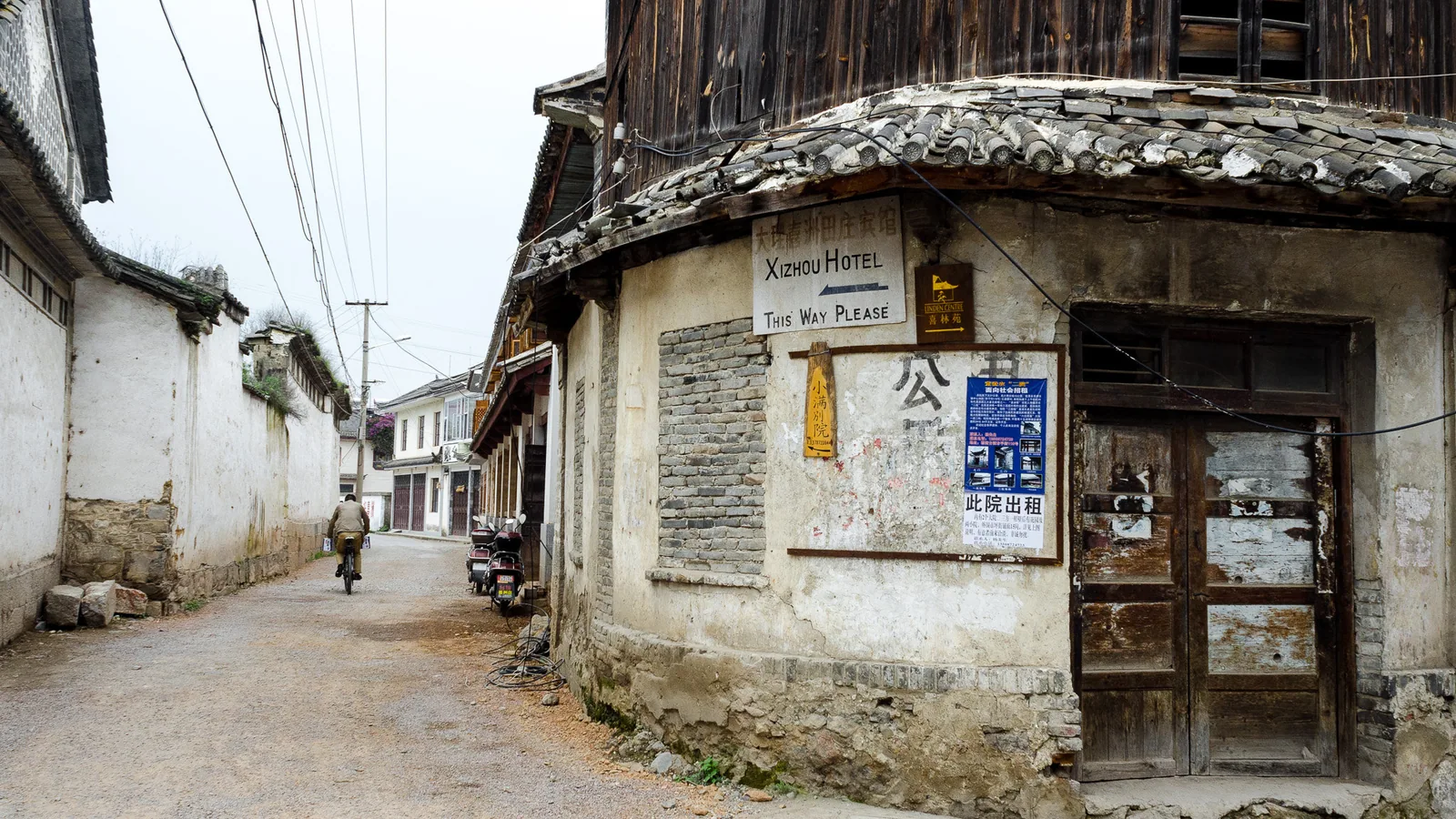
| Bai | 2,091,543 | Yunnan, Guizhou and Hunan, with smaller communities in Sichuan and Chongqing | Xizhou courtyard walk |
| Dai | 1,329,985 | Yunnan, particularly Xishuangbanna and Dehong, as well as Gengma and Menglian | Manting and Jinghong heritage walk |
| Dong | 3,495,993 | Guizhou, Hunan and Guangxi, with communities also in Hubei | Zhaoxing drum-tower walk |
| Gaoshan | Separate geographic series | Taiwan’s mountain areas, eastern valleys and offshore islands; smaller mainland communities occur in places including Fujian | Hualien community-hosted visit |
| Hani | 1,733,166 | Yunnan, especially Honghe, with communities in the Pu’er and Xishuangbanna areas | Duoyishu viewing session |
| Kazakh | 1,562,518 | Xinjiang, particularly Ili, Altay and the Tianshan pastoral areas, and Aksai in Gansu | Yining heritage and market day |
| Manchu | 10,423,303 | Liaoning, Hebei, Heilongjiang, Jilin, Inner Mongolia and Beijing, with communities elsewhere in China | Shenyang Imperial Palace |
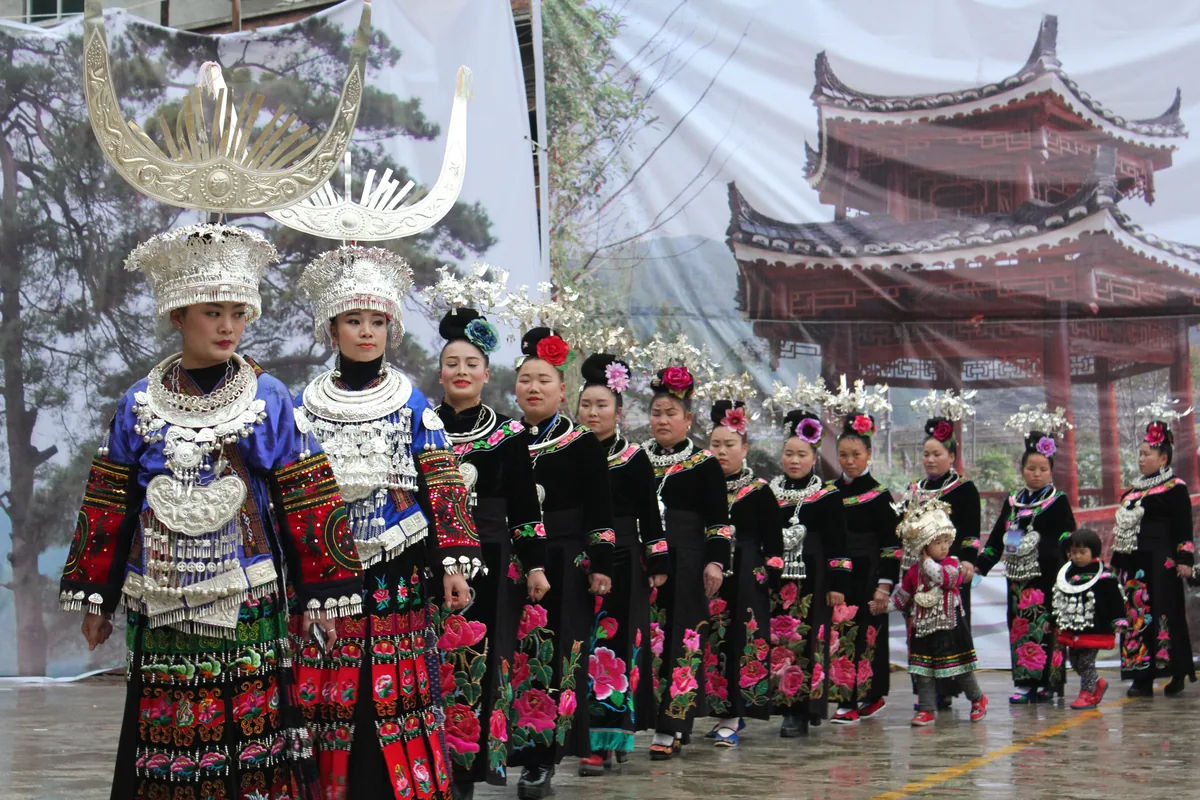
| Miao | 11,067,929 | Guizhou, Hunan and Yunnan, with communities in Guangxi, Chongqing, Hubei, Sichuan and elsewhere | Kaili museum introduction |
| Naxi | 323,767 | northwestern Yunnan, particularly Lijiang, with communities in parts of Sichuan and Tibet | Dayan water-and-lane walk |
| Yao | 3,309,341 | Guangxi, Hunan, Guangdong, Yunnan, Guizhou and Jiangxi | Huangluo community visit |
| Zhuang | 19,568,546 | Guangxi, particularly its western and central areas, and Wenshan in Yunnan, with communities in Guangdong and elsewhere | Guangxi museum introduction in Nanning |
Language, writing and interpretation
Ethnic names and language families do not form a simple one-to-one map. Bai and Naxi language contexts differ from Dai and Zhuang Tai languages, Dong Kam-Sui speech and Kazakh Turkic speech. Miao and Yao labels can cover several regional language communities. Manchu is a Tungusic language with a historical vertical script. Within the Gaoshan umbrella, named Taiwan Indigenous peoples have distinct Austronesian languages. These distinctions matter when hiring an interpreter or asking who can explain a song or manuscript.
Writing also needs context. Dongba manuscripts in Naxi heritage involve ritual knowledge and oral interpretation. A copied pictograph on a shop sign is not evidence that the purchaser has learned the writing system. Bai has modern Latin-based writing alongside historical character-based material. Dai script traditions differ between regions, and Zhuang has both historical Sawndip and modern Latin-based contexts. Ask whether an object is an original manuscript, a teaching reproduction or a contemporary souvenir.
For a 60–90 minute hosted introduction, one interpreter and three prepared questions usually offer a clearer exchange than a large group asking unrelated questions. Suitable starting questions concern the object being made, the building being used or the song being taught. If the host cannot answer in English, allow time for translation instead of replacing their explanation with an internet summary.
Dress, food and buildings: compare the actual place
Around Dali, Bai courtyard houses and Zhoucheng tie-dye offer a useful paired subject. Around Lijiang, Naxi water channels, courtyards and manuscript interpretation lead to different questions. In southeastern Guizhou, Dong drum towers and covered bridges can be compared with an accurately identified Miao timber village. The comparison should concern construction, use and local history, rather than a contest over which settlement looks older.
Food works in the same way. A Dai cooking session near Jinghong can discuss herbs, sticky rice and seasoning; a Hani terrace visit can connect a meal to rice farming and water management. A Kazakh host may explain dairy and pastoral food, while a Manchu-focused museum visit can distinguish documented traditions from a modern northeastern restaurant menu. Agree on allergies and alcohol preferences before the visit. Names such as oil tea, sour soup or rice cake do not supply a complete ingredient list.
At a textile workshop in Kaili, Jinxiu or Jiuzhou, ask the maker for the place of origin, material, production method and intended use. Handwork, machine production and contemporary adaptation can all be honestly sold if labelled accurately. Inherited ceremonial garments and sacred objects are different from ordinary products prepared for sale. Do not assume that a visitor may wear or purchase an object merely because it is displayed.
Festival seasons and five workable experiences
Festival travel needs both a traditional calendar and a current public notice. Dali’s Third Month Fair, relevant Zhuang third-lunar-month events, and Taijiang-area Miao celebrations are spring examples with dates that change against the Gregorian calendar. Dai water-splashing celebrations commonly occur around mid-April. Hani and Dong New Year observances vary locally. Amis harvest celebrations are associated with summer, but each host village controls its own program. A daily tourist performance is a different booking from an annual community ceremony.
Choose from these five experience types and arrange a named provider. The durations below are proposed itinerary allowances, not official venue hours or guaranteed services.

Museum plus one hosted village
Begin with a 90-minute regional collection visit, then reserve half a day for a named community host. Kaili, Dali, Lijiang and Nanning offer different regional contexts. Confirm the exact collection or exhibition and the host village so the two visits connect meaningfully.
Textile workshop
Reserve 2–3 hours for a lesson in one technique, such as tying cloth around Zhoucheng or embroidery in a specifically identified Guizhou community. Ask what materials are included, whether a finished item can be collected the same day and how the maker is paid.
Music with interpretation
Arrange 60–90 minutes with performers who agree to explain one song, instrument or teaching tradition. Dong Grand Song and Kazakh dombra interpretation are different choices. Confirm the language, group size and recording rules; an admission ticket to a scenic area does not automatically include a rehearsal.
Food and farming conversation
Allow about 3 hours for a market, a hosted cooking activity and a meal if the provider offers that combination. Jinghong and Yuanyang provide different subjects. Ask about ingredients before the market stop and keep farm paths and water channels clear.
Dated public celebration
Build a half-day or longer around the organizer’s published visitor program. Obtain the date, spectator area, permitted participation and return transport. Keep a museum or workshop alternative if rain, community obligations or attendance limits change the event.
Choose one coherent region before adding more stops
For a first cultural itinerary, a Dali–Lijiang combination can compare Bai and Naxi settings without pretending that both are one tradition. Add separate nights in each base and leave a travel allowance between them. A Guizhou route can begin in Kaili and continue toward a selected Dong settlement, with the village visits tied to named hosts. A Guangxi route can start with Nanning’s regional interpretation before choosing either western Guangxi crafts or a Longsheng settlement context. These are different geographic choices; adding all of them to one short holiday would leave less time with residents.
A Kazakh pastoral trip in Ili or Altay belongs to a separate northern Xinjiang plan with checked road and seasonal access. Manchu interpretation around Shenyang offers a city-and-museum route rather than a southwest village circuit. Taiwan Indigenous community visits require their own travel and entry arrangements; a mainland visa or visa-free permission does not automatically authorize the onward destination. For any cross-region route, count the actual arrival and departure days before promising four complete activity days.
Consent, private spaces and fair payment
An open village lane is not permission to enter every house. Ask before crossing a threshold, sitting in a ritual place or photographing a household activity. Obtain a person’s consent for a portrait and guardian permission for a child. Permission to take a photograph is distinct from permission to publish it commercially. Large cameras, drones and lights need explicit discussion with the host and any relevant site manager.
For a small group, write down the host fee, interpreter fee, transport, meal and admission separately. A cheap scenic-area ticket may include no community encounter at all. Pay an agreed demonstration fee even when no souvenir is purchased. Ask who made an object and where the money goes, without demanding private household financial information. Cultural exchange should leave the host in control of what they explain, display and share.
Questions about China’s ethnic-group classification and cultural visits
Does China have 56 minority groups?
The official classification has 56 groups in total: the Han majority and 55 minorities. The 2020 census counted 125,467,390 people in ethnic minorities on its national statistical basis. Keep the census year and geographic coverage visible when using a population number.
Which region works best for a first cultural trip?
Choose by interest and route. Dali and Lijiang offer Bai and Naxi contexts; southeastern Guizhou offers selected Miao and Dong visits; Guangxi offers several distinct communities and regional museum options. Book specific hosts rather than a generalized minority-village stop.
Can I photograph festivals and traditional dress?
Ask the participant and organizer. Public attendance does not remove restrictions on ritual spaces, children or publication. A demonstration or paid portrait arrangement should state consent, payment and image use before photography begins.
Are festivals held on the same date every year?
Many use lunar or local calendars, while public programs can also change. Obtain a current village or regional notice. A tourist stage show available every evening should be described separately from an annual community celebration.
How should I check a cultural claim?
Start with the official community profile, then consult the relevant museum, heritage listing or named local interpreter. Distinguish an object’s historical label from contemporary household practice. Ask where a song, garment or story comes from before treating it as national or universal.
National census, ethnic-group and cultural heritage references
- National Ethnic Affairs Commission: official ethnic-group directory
- National Bureau of Statistics: Seventh Census, communiqué No. 2
- UNESCO: Grand Song of the Dong ethnic group
- UNESCO: Honghe Hani Rice Terraces
- UNESCO: Old Town of Lijiang
- Taiwan Tourism Administration: Indigenous ceremonies
- National Ethnic Affairs Commission: Bai profile
- National Ethnic Affairs Commission: Dai profile
- National Ethnic Affairs Commission: Dong profile
- National Ethnic Affairs Commission: Gaoshan profile
- National Ethnic Affairs Commission: Hani profile
- National Ethnic Affairs Commission: Kazakh profile
- National Ethnic Affairs Commission: Manchu profile
- National Ethnic Affairs Commission: Miao profile
- National Ethnic Affairs Commission: Naxi profile
- National Ethnic Affairs Commission: Yao profile
- National Ethnic Affairs Commission: Zhuang profile