
Dong population and Kam-Sui language varieties
The National Ethnic Affairs Commission records 3,495,993 Dong people in its 2020 population figure. This is a dated national count, not the current population of Zhaoxing or the number of people available to receive visitors.
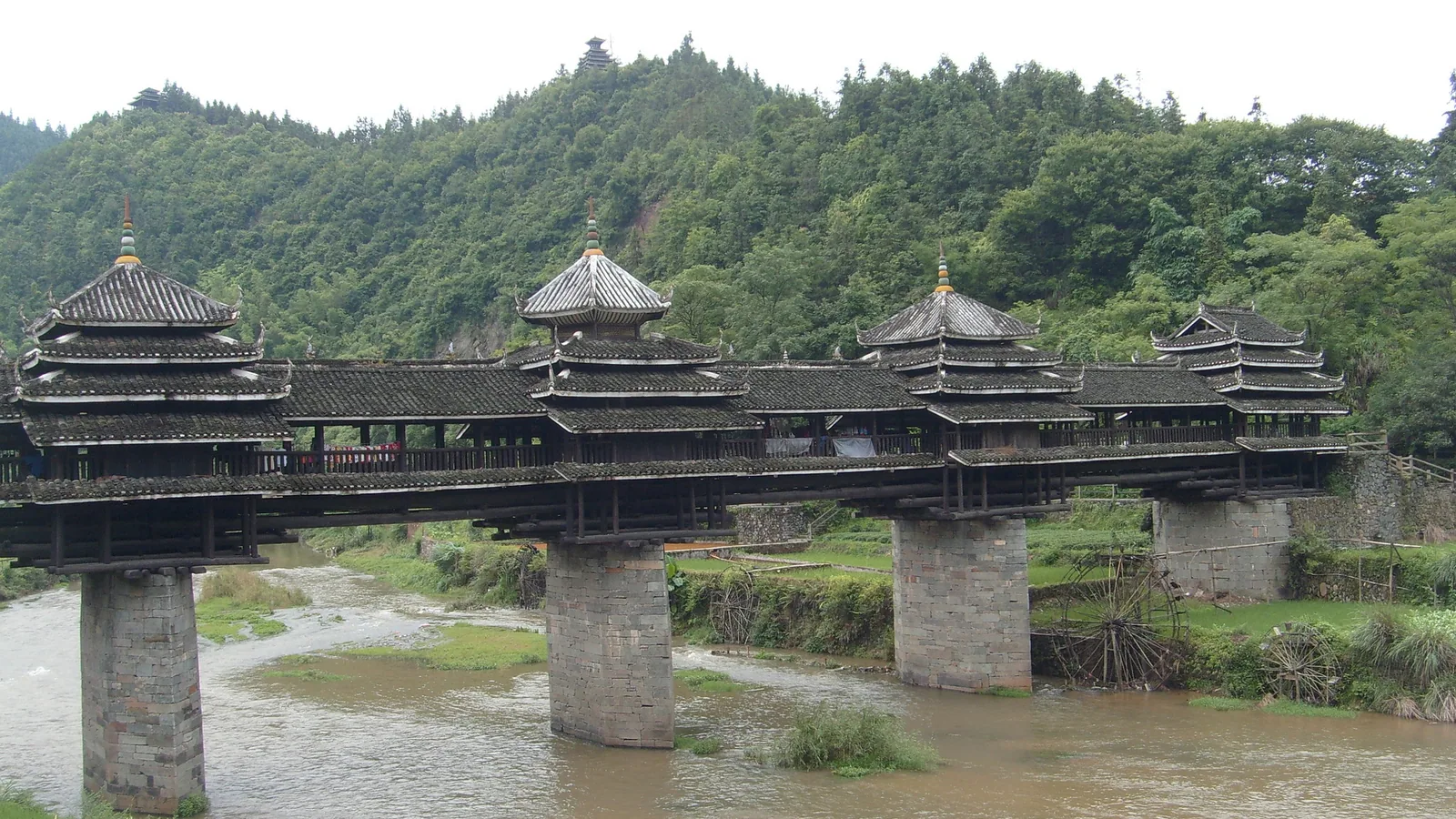
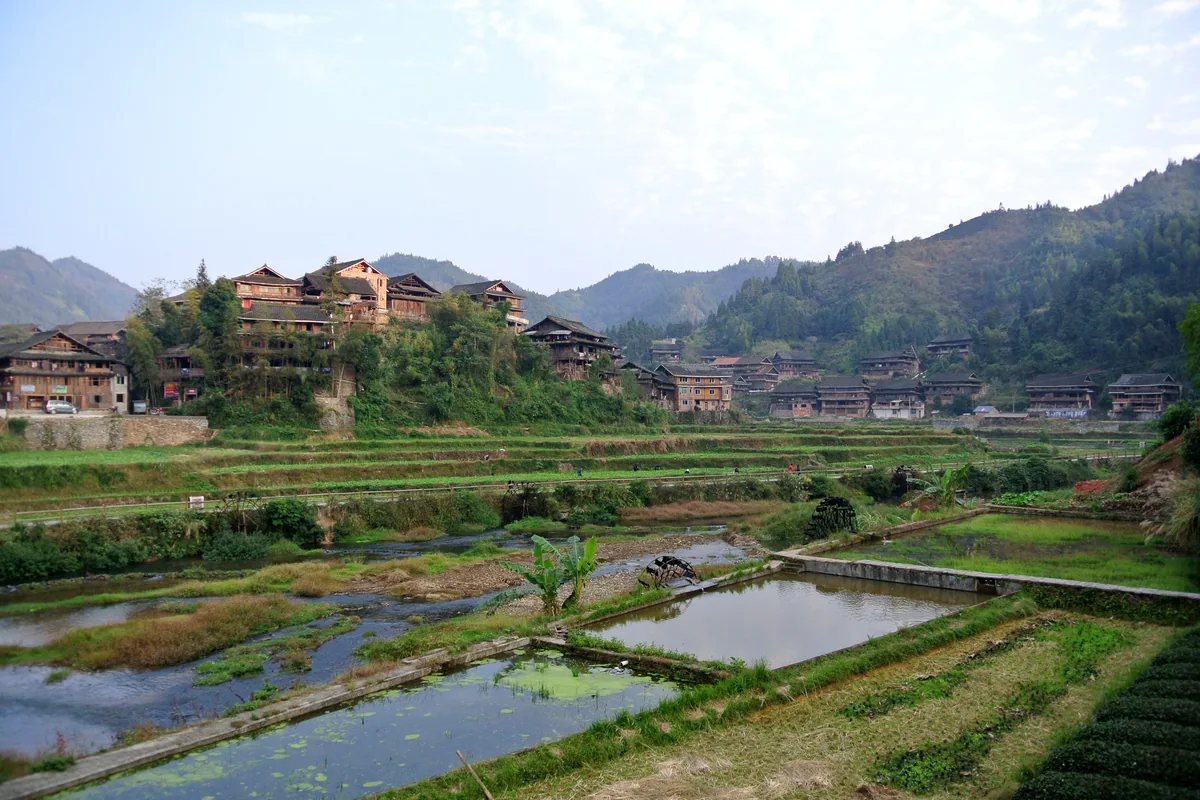
The principal areas for this guide are Guizhou, Hunan and Guangxi, with communities also in Hubei. Dong villages often sit beside streams and rice-growing valleys on the eastern side of the Yunnan-Guizhou Plateau. A covered bridge connects everyday routes as well as providing shelter. Village layout is best understood by following the relationship between homes, water, rice fields and meeting places.
Dong is a tonal Kam-Sui language within the Kra-Dai family. Northern and southern varieties differ. A Latin-based writing system was developed in the twentieth century, while oral teaching remains central to song traditions. An English explanation of a song should identify the village and the translator.
Dong population and language references:
Official community profileTimber towers, sheltered bridges and Dong meals
Indigo cloth, embroidery and silver ornaments vary by village, age and occasion. Handwoven fabric and machine-made fabric coexist. Ask a seller to distinguish the making process and material rather than assuming that a silver-coloured ornament is solid silver or that every embroidered panel is old.
Drum towers are communal meeting and performance spaces, while wind-and-rain bridges shelter crossings. Timber joints and layered roof forms deserve close attention. Do not generalize a claim about traditional joinery to every repaired bridge or modern building; restoration can involve different materials.
Glutinous rice, fish, oil tea and sour preserved foods feature in Dong food traditions. Oil tea is not necessarily a plain tea drink: preparations may include grains, nuts or other additions. Ask how preserved dishes are served and choose fully cooked alternatives if required.
Dong traditions reference:
Official traditions referenceDong New Year and locally arranged song gatherings
Dong New Year, village gatherings and seasonal song events follow local calendars. There is no single national performance timetable for all Dong settlements. UNESCO inscribed the Grand Song tradition in 2009; an inscription recognizes heritage and does not promise a free show at every drum tower.
Spring and autumn allow rice-field and village walks with rain alternatives. Summer can be humid and wet, while winter evenings in timber guesthouses may be chilly. Confirm heating and bathroom arrangements before choosing an overnight solely from a picturesque exterior.
For a festival-led trip around Zhaoxing, ask the organizer for the Gregorian date, location and visitor hours. Zhaoxing’s village calendar determines a Dong New Year gathering; a choir performance sold separately should have its own description and agreed time. A drum-tower discussion or museum introduction provides a useful alternative when singers have community duties or weather makes the public event impractical for the visiting group.
Distinguishing Dong music from Miao traditions
Dong and Miao communities share parts of southeastern Guizhou but have different languages and performance traditions. Grand Song’s unaccompanied multi-part singing is a useful Dong focus. Silver ornaments and stilted houses appear across several groups and cannot identify a person’s ethnicity by themselves.
A useful comparison with Miao context around Kaili begins with language, settlement history and the maker of an object. When comparing a Dong choir with a Miao lusheng session, ask the performers to identify the repertoire and the village where it is taught. Shared timber roofs or indigo clothing around southeastern Guizhou do not allow a visitor to assign an individual’s ethnicity or describe current household life from a museum display.
Four Dong architecture and music experiences
Treat the allowances for visits to Dong communities as route-design allowances; choir bookings and public building access require their own confirmation. Select two complementary experiences for a short stay around Zhaoxing and confirm the exact venue, host and fee before booking.
Zhaoxing drum-tower walk
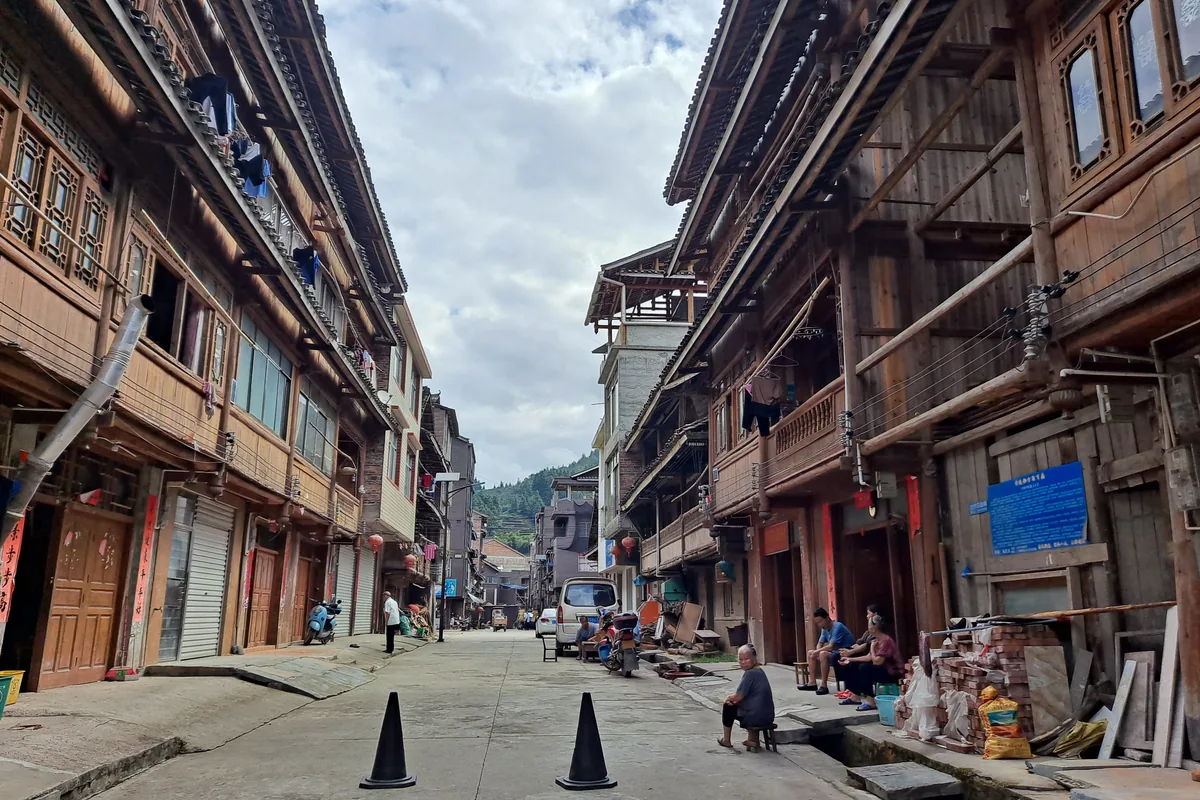
Planning time for zhaoxing drum-tower walk: 2 hours. Focus: communal architecture. Choose a walking route that connects several towers and public lanes. Ask how the towers are used today and where visitors may sit. Avoid entering an occupied household just to compare timber details. Agree on a Zhaoxing meeting point beside a named public landmark and establish which drum towers welcome the group. A resident’s invitation is needed for any household visit; an entry ticket for the surrounding scenic area does not grant it.
Tang’an terrace extension
Planning time for tang’an terrace extension: half a day. Focus: agricultural landscape. Arrange transport and a locally checked walking route from the Zhaoxing area. Discuss water channels and rice-field work from public paths, with an alternative ride if weather makes the descent slippery. Keep Tang’an’s agricultural walk within a protected half-day rather than adding another paid appointment immediately after it. Set the return pickup with the Zhaoxing driver and identify a shorter route if wet paths, tired participants or a local closure make the extension impractical.
Chengyang bridge visit
Planning time for chengyang bridge visit: 1 day. Focus: bridge architecture. Use Sanjiang in Guangxi as the base for the Chengyang bridge and village setting. Treat it as a separate stop with its own transfers, admission arrangements and guide rather than a nearby Zhaoxing suburb. The Chengyang quotation should distinguish site admission, village-host payment, interpretation and transport from Sanjiang. Ask who will explain the bridge’s construction and present use, so the visit includes local knowledge as well as the time spent beside the timber crossing.
Grand Song listening session
Planning time for grand song listening session: 60–90 minutes. Focus: living music. Book a community-approved rehearsal or performance and ask about repertoire, teaching and the meaning of one song. Confirm whether audio recording is allowed and whether the payment reaches the performers. Set the Grand Song recording agreement with the performers before the session, specifying whether any clip may be shared later. A public festival audience, a paid listening lesson and a choir’s private rehearsal have separate boundaries even in the same village hall.
Two nights in Zhaoxing with time for Tang’an
A two-night Zhaoxing stay gives a calmer introduction than an arrival followed by immediate departure. Spend the first afternoon on drum towers and village layout, reserve one evening for an agreed listening session, and use the following morning for Tang’an or a local agricultural walk. The weather decides whether a path is appropriate; a prearranged vehicle return avoids pressuring the group to finish a slippery descent. Chengyang and Sanjiang in Guangxi deserve their own transfer and overnight calculation. For a music booking, confirm the number of performers, the duration and whether a translation is included. A brief welcome song and a full Grand Song introduction are different experiences. An admission ticket may give access to public lanes without admitting visitors to a rehearsal, a home or every tower interior. Ask who maintains a bridge and how repair work is recorded. Photograph the bridge from a place that leaves residents a clear crossing, and keep the group together where the path is narrow.
Consent in Dong communal spaces and choir sessions
Keep a drum tower doorway and bridge walkway clear for residents. Obtain consent before recording a choir, particularly if children participate. Do not assume a greeting drink must be consumed; explain a medical or personal restriction politely and let the host offer an alternative.
For a host visit near Zhaoxing, arrange the group size and language support in advance. A Dong host can use a 90-minute interpreted session to explain one tower, song or craft process in detail if the group takes turns. Choose a few questions about what is being shown and listen to the speaker’s own experience. Leave private finances, family relationships and religious commitments to the host’s discretion, including the choice not to discuss them.
For a Dong timber guesthouse, have the provider describe the walk from the parking point, steps to the room, bathroom facilities and temperature control before you pay. Clarify the luggage-carrying arrangement when vehicles stop outside the lanes. A scenic photograph beside a drum tower does not establish the access or facilities of the particular room offered to your group. For the Tang’an terrace extension option, ask whether the route can be shortened and whether a vehicle can meet a participant who needs to stop walking.
At a craft purchase or meal in Zhaoxing, ask for the maker’s name or the restaurant name on a receipt and agree on the full price before ordering. At a Dong table, a written dietary note should cover the ingredients of oil tea, sour foods, stocks and sauces as well as utensils shared during preparation. The host’s explanation can help establish whether the meal suits the guest. If greeting drinks contain alcohol, ask the guide to arrange a polite refusal or a substitute before the welcome begins.
Before recording Dong singers or photographing a host, obtain the adults’ agreement and the relevant guardian’s permission for children in the group. A performance photograph approved for personal memories is not automatically approved for an advertisement. Ask expressly about drones, lights and bulky recording setups in communal or household spaces, particularly around ritual activities. The rehearsal or craft demonstration has an agreed payment for the contributor’s time; that payment remains due even if the visitor decides against buying an additional object or souvenir afterwards.
Dong village travel questions
Where should I begin a Dong cultural visit?
Use Zhaoxing as the initial planning base for the experiences described here. Start with Zhaoxing drum-tower walk or an interpreted collection visit, then add a named host or workshop. If you continue from Zhaoxing toward Chengyang, identify the Dong village and local host for that stop instead of transferring one settlement’s description to another.
How can I arrange interpretation of Dong songs?
Mandarin may suffice for reaching Zhaoxing, but a Dong song explanation needs someone able to interpret the local Kam-Sui variety and its cultural vocabulary. Name the English interpreter in the choir or craft booking and ask what they can cover, including lyrics or writing if those are part of the visit. General travel assistance alone does not establish that specialist language service.
Can a Dong choir session happen outside New Year?
A Dong choir lesson can be arranged independently of the village’s New Year or festival date if the singers accept the booking. The organizer should label that session clearly rather than advertising every performance as an annual community gathering. For Zhaoxing, confirm the current notice, public hours and participation rules before booking transport around an event.
What allowance works for Dong village encounters?
A Dong introduction works with one architecture or museum session and one hosted encounter, reserving at least half a day for a village activity that needs a separate transfer. Tang’an terrace extension has a suggested allowance of half a day. Dong session lengths guide the itinerary, while the village or choir provider determines the confirmed access and schedule.
What consent is needed for Dong choir recordings?
Discuss photographs and publication with the Dong participant and the building or performance organizer. Zhaoxing’s public paths run past homes, while a festival audience cannot grant consent on behalf of the singers or residents. Keep a drum tower doorway and bridge walkway clear for residents. Obtain consent before recording a choir, particularly if children participate. Do not assume a greeting drink must be consumed; explain a medical or personal restriction politely and let the host offer an alternative.
Dong community and Grand Song source material
- National Ethnic Affairs Commission: Dong overview
- National Ethnic Affairs Commission: Dong cultural traditions
- UNESCO: Grand Song of the Dong ethnic group
Dong population information is dated to the national 2020 figure. For the visit itself, use the named village, choir or collection provider to confirm exhibitions, public events, fees and access. The suggested tower walks and listening-session lengths are Vayora itinerary allowances; the heritage sources document cultural context rather than promising those durations or an available booking.