
Read the official holiday and workday calendar
Read the published calendar as a transport-planning document. A break can include adjusted workdays before or after it, which changes when residents travel. Check the dates again when rail or flight inventory opens, not only when choosing the holiday.
Secure the first and last transport legs
For a major holiday, lock the first and last transport legs before adding day trips. This is where a route needs its greatest resilience. Hotels near a station or airport can be more valuable than a more scenic but remote final night.
Use the day’s quieter time windows
Use time of day to reduce pressure: booked attractions near opening, neighbourhoods at midday and flexible walks near evening. The aim is not to defeat crowds everywhere, but to avoid putting every fixed activity into the busiest window.
Choose an anchor city with nearby alternatives
Choose a holiday route with one anchor city and nearby alternatives. If a famous landmark’s booking or weather changes, a museum district, food street or waterfront walk can still make the day worthwhile without an emergency long-distance transfer.
Confirm each provider’s operating hours
Avoid assuming every business follows the same holiday rhythm. Confirm the specific hotel, attraction, rail service or restaurant close to travel. A calendar is a framework; live operating details still come from the provider.

Official 2026 calendar
| Holiday | Break | Make-up working days |
|---|---|---|
| New Year | 1–3 January | 4 January |
| Spring Festival | 15–23 February | 14 and 28 February |
| Qingming | 4–6 April | None in this notice |
| Labour Day | 1–5 May | 9 May |
| Dragon Boat | 19–21 June | None in this notice |
| Mid-Autumn | 25–27 September | None in this notice |
| National Day | 1–7 October | 20 September and 10 October |
The 2026 published holiday blocks
The State Council notice of 4 November 2025 sets the 2026 arrangements: New Year, 1–3 January; Spring Festival, 15–23 February; Qingming, 4–6 April; Labour Day, 1–5 May; Dragon Boat Festival, 19–21 June; Mid-Autumn Festival, 25–27 September; and National Day, 1–7 October. Spring Festival is a nine-day adjusted break in this schedule. These dates are specific to 2026. A 2025 or 2027 itinerary must use its own published notice rather than shifting these dates by weekday.
Make-up working days change the week
The same notice specifies working days on 4 January, 14 and 28 February, 9 May, 20 September and 10 October 2026. A Sunday can therefore operate as a working day while an adjacent weekday is part of a break. Check offices, museums and business appointments against both the holiday block and the make-up day. A general rule such as every weekend is quiet does not account for the adjusted calendar.
Rail tickets need the actual route and release notice
Use 12306 for the correct departure station, train and passenger identity. The English service publishes its ticket-sale and change hours, while the actual route and sales release need to be checked on the live booking system. Beijing South and Shanghai Hongqiao are not interchangeable with every station in their cities. Choose a second acceptable service or a later travel day before the first choice sells out. Do not rely on an old screenshot as a seat guarantee.
Build crowded days around one fixed booking
During a long break, reserve one principal attraction or transfer and allow surrounding time for queues and local movement. A Palace Museum booking, a long Great Wall excursion and an evening train are three fixed commitments with little recovery space. A city-base day can combine a reserved museum with a neighbourhood walk, keeping the second activity flexible. Verify the attraction’s own holiday notice and reservation requirements rather than assuming normal operating hours.
Separate the transport surge from the whole holiday
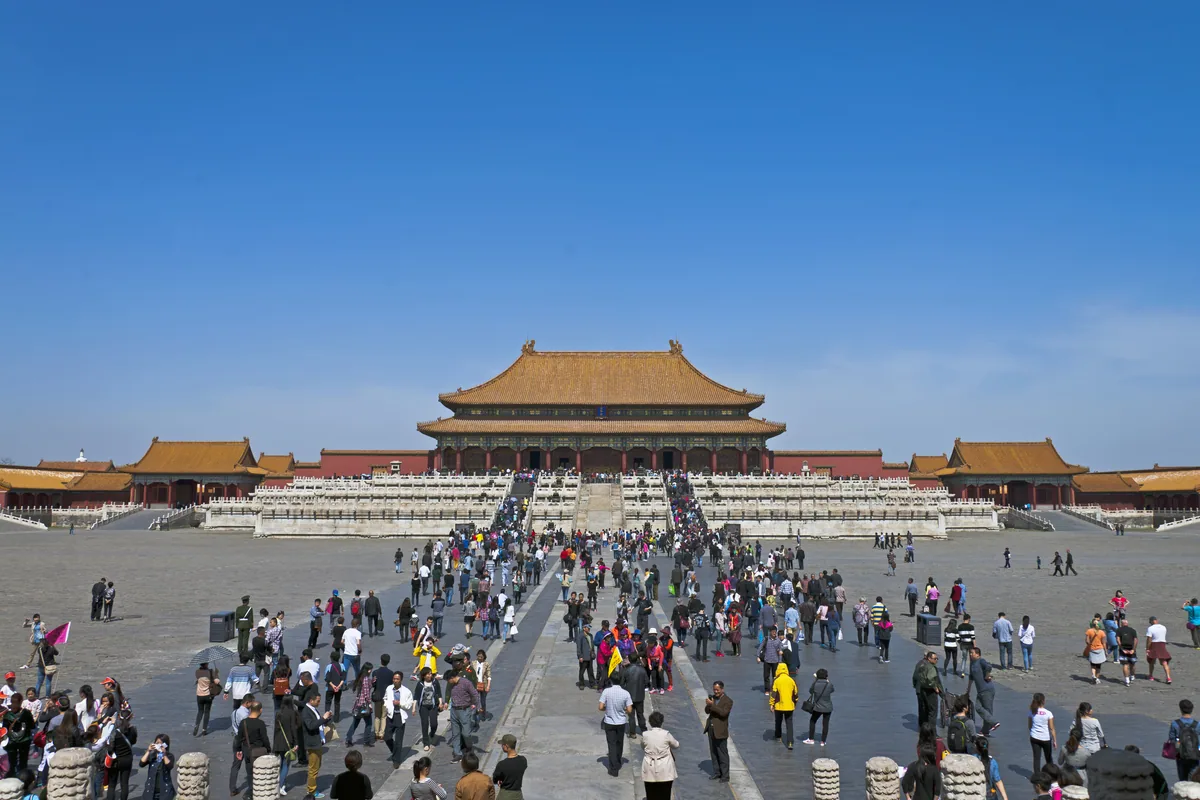
The beginning and end of a break can create different station and airport pressure from a middle day. Spring Festival also involves family travel beyond the formal nine-day block. Avoid promising that one weekday will be crowd-free simply because it is not a statutory holiday. Compare the live transport and hotel options for your exact route, then decide whether moving the transfer or staying in the same city is more useful.
Use a realistic alternative when capacity is limited
A quieter museum, park or neighbourhood can serve as the second option, but it needs its own current access check. Do not move a group to an unreserved famous site after another booking fails. Keep the hotel arrival and return transport stable while changing the daytime activity. For a family, a shorter walking circuit and an indoor meal may be more practical than chasing a last-minute ticket across the city.
Apply the calendar to an actual booking
Consider a Beijing–Xi’an–Shanghai itinerary around 1 October 2026. First mark the official break from 1 to 7 October. Next identify which hotel nights and intercity legs fall within that interval. Compare moving a domestic transfer to a date outside the break, while keeping the international tickets and the allowed stay consistent. The make-up working days on 20 September and 10 October can affect office appointments; they do not by themselves guarantee quiet attractions.
For Spring Festival 2026, the published nine-day break runs from 15 to 23 February, with work on 14 and 28 February. If a village, small restaurant or craft workshop is central to the trip, ask its actual host which days it receives visitors. A national transport service and a family-operated workshop can follow different operating patterns. Do not replace that enquiry with a statement that every business is closed or every attraction is open.
Write the official holiday dates, the attraction’s opening notice and the ticket cancellation deadline in separate columns. When a reservation is unavailable, compare a different time slot, another day in the same base or an alternative that needs no equivalent timed booking. Keep the original passport details consistent for real-name purchases. A plan with two confirmed principal reservations and flexible nearby walks is easier to recover than a day containing four prepaid appointments in different parts of the city.
A concrete planning example
For a 2026 National Day trip, treat 1–7 October as the official break and note the working days on 20 September and 10 October. If an intercity journey can move outside the break, compare that option before paying. If the dates are fixed, reduce city changes, book the essential journeys and leave one flexible city activity each day.
What to put in the travel folder
For public-holiday scheduling around Beijing and Shanghai, keep the official 2026 holiday notice and ticket order with the dated itinerary. The an intercity rail booking is the first fixed item to reconcile before adding another deadline.
Keep a city-base day without an intercity transfer as a usable alternative and identify when it becomes necessary. Allow time to contact the State Council, railway or attraction operator before the next fixed commitment.
Frequently asked questions
What should I arrange first?
Start with an intercity rail booking and confirm the passport or identity details, date and provider where required. For Beijing and Shanghai, also identify the actual entrance or meeting point before adding another fixed activity.
Which source should I use for current details?
Use the State Council, railway or attraction operator for the actual rule, service or operating decision. The sources below identify the responsible channels.
What should I keep available offline?
Keep the official 2026 holiday notice and ticket order and the exact meeting or accommodation address accessible.
What can I do if the first choice fails?
Use a city-base day without an intercity transfer after checking that it is available and suitable for the group.