

Practical chapter 1
Conditions by region
China spans tropical, temperate, desert and high-altitude climates, so a single national temperature is not useful. For the seasonal question, china’s weather changes sharply with latitude, elevation and distance from the coast.
- Once the route is drafted, compare and reconfirm the allergy or accessibility request for the seasonal question, before moving to a non-refundable choice.
- For a smoother arrival, identify and validate the exact address and reservation terms for the seasonal question, without making the phone a single point of failure.
- Before committing money, review and update the passport-specific or traveler-specific requirement for the seasonal question, so the local experience remains respectful and calm.
Practical chapter 2
Where this timing works
Plan by route and elevation, then recheck the short-range forecast for each stop. In a the seasonal question plan, comfort depends on rain, wind, humidity, altitude and daylight as much as temperature.
- When the date is known, ask a responsible source to verify the local name and Chinese characters for the seasonal question, while there is still time to change the plan.
- As the trip approaches, write down and share the meeting point and responsible contact for the seasonal question, with the needs of the whole group in mind.
- For each traveler, prepare and test the passport-specific or traveler-specific requirement for the seasonal question, so an outdated screenshot cannot control the day.
Practical chapter 3
What to pack
Holiday crowds and daylight can matter as much as temperature when choosing dates. In a the seasonal question plan, use the month as a planning frame, then make decisions city by city.
- At the destination, translate and store the payment and connectivity backup for the seasonal question, before the next fixed booking is affected.
- For the final itinerary, translate and store the meeting point and responsible contact for the seasonal question, before moving to a non-refundable choice.
- Before departure, ask a responsible source to verify the relevant opening or access notice for Best Time To Go China, and leave one workable alternative.
Practical chapter 4
Disruption and crowd plan
China spans tropical, temperate, desert and high-altitude climates, so a single national temperature is not useful. In a Best Time To Go China plan, china’s weather changes sharply with latitude, elevation and distance from the coast.
- During the first planning pass, write down and share the payment and connectivity backup for Best Time To Go China, and keep the result with the travel documents.
- When comparing options, write down and share the last practical connection of the day for Best Time To Go China, and recheck it close to departure.
- Once the route is drafted, prepare and test the relevant opening or access notice for Best Time To Go China, and leave one workable alternative.
Practical chapter 5
Build it into an itinerary
Plan by route and elevation, then recheck the short-range forecast for each stop. In a Best Time To Go China plan, comfort depends on rain, wind, humidity, altitude and daylight as much as temperature.
- For a smoother arrival, translate and store the essential booking details for Best Time To Go China, instead of compressing two uncertain steps together.
- Before committing money, translate and store the last practical connection of the day for Best Time To Go China, without making the phone a single point of failure.
- When the date is known, ask a responsible source to verify the cancellation and change conditions for Best Time To Go China, and leave one workable alternative.
Month-by-month planning table
| Month | North or inland | South or east | Check before booking |
|---|---|---|---|
| January | Harbin for confirmed winter attractions; Beijing for culture | Xishuangbanna for a southern base | 1–3 January 2026; cold northern outdoor periods |
| February | Northern city collections and verified winter activities | Yunnan regional stays with host confirmation | Spring Festival break: 15–23 February 2026 |
| March | Beijing can still have cool exposed outings | Suzhou and Hangzhou for emerging spring landscapes | Blossom dates depend on species and the current weather |
| April | Beijing city-and-Wall route | Jiangnan gardens, Guilin landscape routes | Qingming break: 4–6 April 2026; rain can affect paths |
| May | Beijing, Xi’an and selected inland landscapes | Gardens and regional cultural stays | Labour Day: 1–5 May 2026; reserve principal journeys |
| June | Compare heat and local rain at each base | Jiangnan rain and coastal activity checks | Dragon Boat: 19–21 June 2026; use live forecasts |
| July | Qinghai or a assessed mountain base | Yunnan regional stays with rain alternatives | School-holiday demand; tropical-cyclone monitoring on coasts |
| August | Qinghai and selected western routes | Dali or Lijiang with flexible outdoor days | Altitude, rain and available transport matter separately |
| September | Beijing and Xi’an cultural routes | Shanghai, Suzhou and Hangzhou regional depth | Mid-Autumn: 25–27 September 2026; coastal warnings can continue |
| October | Beijing or Sichuan with local foliage reports | Yunnan or Jiangnan with regional weather checks | National Day: 1–7 October 2026; no universal leaf-colour peak |
| November | Northern city culture; verify ski openings | Yunnan, Hong Kong or Jiangnan gardens | Jiuzhaigou switches to off-season on 16 November |
| December | Harbin only with actual seasonal operating dates | Southern Yunnan or a Hong Kong city stay | Christmas is not a mainland statutory break; confirm events |
Read the monthly table as a route filter
The table below proposes regions and identifies booking or weather questions; it does not claim that every city has identical conditions in a month. A Beijing–Xi’an cultural itinerary, a Yunnan highland route and a Hainan coastal stay need different decisions. Start with the travel purpose and feasible dates, then use the local forecast and operator notice closer to departure. Numerical temperature averages should be tied to a named station and period, rather than invented as a nationwide daily prediction.
North and south need different packing assumptions
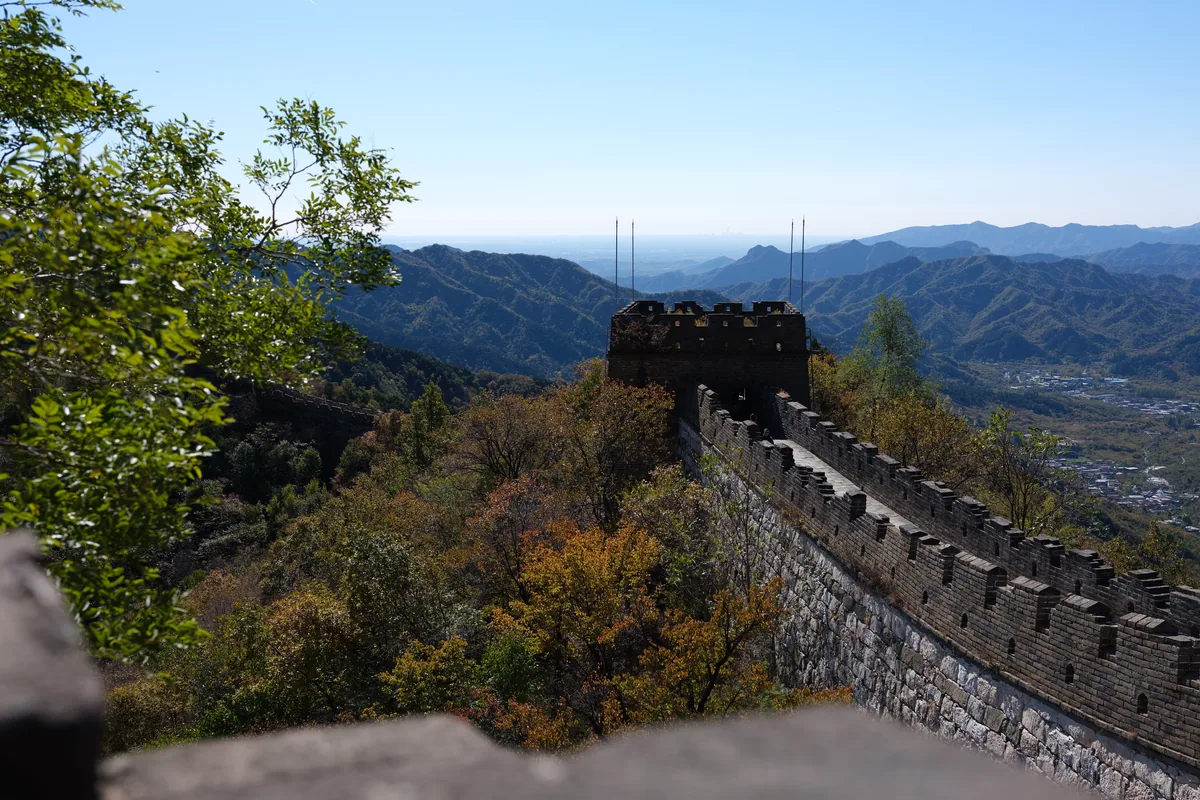
Harbin winter, Beijing shoulder seasons and Shanghai’s damp periods differ from southern Yunnan and coastal Guangdong. Latitude is only one factor: elevation and exposure also matter. A hotel in Lijiang and a higher mountain outing cannot share one clothing assumption. Plan layers for the actual itinerary and check night-time as well as daytime conditions. A garden visit can include covered spaces, while a summit path or Wall outing can be exposed for several hours.

Rain is a scheduling question, not an automatic cancellation
Rain can change views, path conditions and boat operation. Choose the named activity and consult its operator rather than declare the entire month unsuitable. In eastern China, a collection visit or a selected covered garden route may provide another experience if available. For mountain landscapes, use access and weather notices before attempting the original path. A replacement should be appropriate to the actual restriction, not another exposed site under the same warning.
Coastal months require current tropical-cyclone information
Fujian, Zhejiang, Guangdong, Hainan, Hong Kong and Macao can have different impacts during the same storm. NMC and the relevant local meteorological authority provide current warnings; airlines and ferries decide their service operation. Keep a practical recovery allowance before the final international departure. A monthly best-time recommendation cannot authorize a sailing or guarantee a flight. Save the carrier contact and cancellation terms before paying for a weather-sensitive extension.
Avoid peak demand with the actual calendar
For 2026, the official adjusted breaks include 15–23 February, 1–5 May and 1–7 October. Mid-Autumn falls on 25–27 September, close enough to an October trip to affect the date comparison. School holidays can add demand in July and August. Compare live rooms and transport before shifting a trip solely because one week is labelled quieter. Keep the travel year visible: the longer combined 2025 autumn break should not be reused for 2026.
Separate landscape appearance from opening season
A park may be open while a desired blossom, snow or foliage scene is absent. Jiuzhaigou’s published peak season runs from 1 April to 15 November, but this is an operating and ticket category rather than a promise of one landscape appearance. Ski areas and ice displays announce their own sessions. Ask for current local observations if a photograph-dependent experience is central to the journey. Give the route cultural value even when weather changes the view.
A route example
For a first Beijing–Xi’an–Shanghai route, compare an April window outside 4–6 April with a September window outside 25–27 September, using actual reservations and regional forecasts. If adding Yunnan or a coast, assess that leg separately. Select the final dates only after checking the entry permission and international flights.
Frequently asked questions
How many days should I allow?
For northern and southern China, the route example is a proposal; actual transport and admissions determine the final schedule.
What should be in the travel note?
For a travel-month choice, identify who checks an operating change and which confirmed alternative can be used without missing the final departure.